Carpenter in Syracuse, NY: Wood Rot, Structure & Finish Work
Syracuse Carpentry is a local residential carpentry shop serving Syracuse and the surrounding areas including Liverpool, Baldwinsville, North Syracuse, and East Syracuse. For homeowners searching for a carpenter near me in Syracuse, we handle the full range of wood carpentry work: wood rot and dry rot repair, structural framing and joist work, beam replacement, and the finish carpentry and custom built-ins that make an older house feel like home. We are fully insured and work on the same buildings year after year, which means we know how this housing stock settles, fails, and can be repaired right.
The houses that make up Syracuse are a century or more of accumulated craft and compromise. The Victorian Queen Annes and Italianates on the Near Westside and Tipperary Hill sit on limestone foundations with wood sills close to grade. The Arts and Crafts homes on Sedgwick Farm and Strathmore have the tight floor plans and period trim that demand precision. The two-family flats stacked through Westcott and Eastwood have back stairs, out-of-square openings, and wood that has moved with the seasons for eighty or a hundred years. That is the building stock we know, and the climate that tests it hardest.
Why Wood Fails in Syracuse, and How We Read It
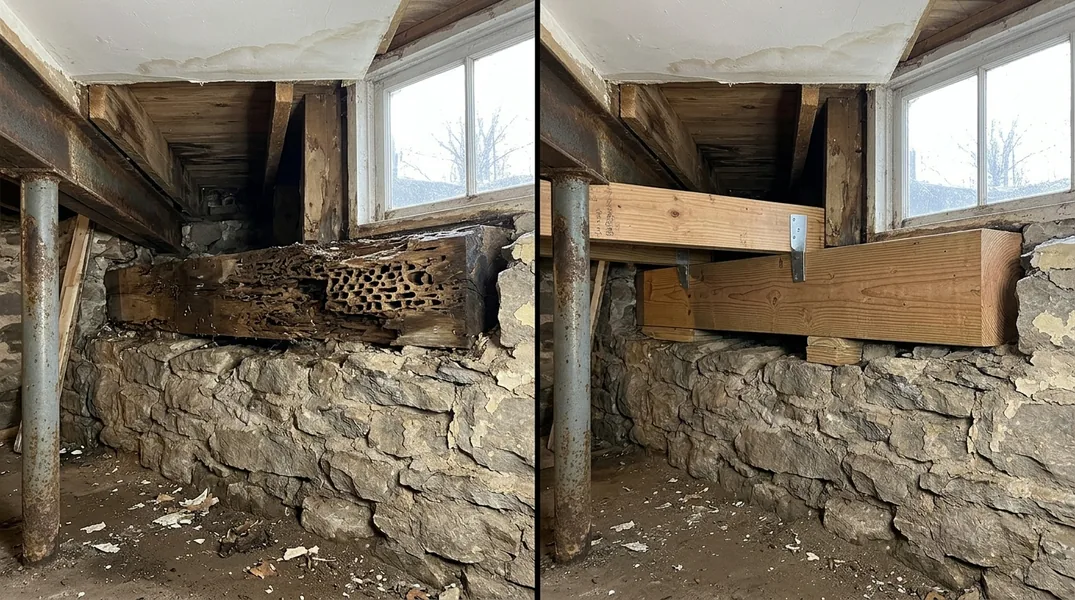
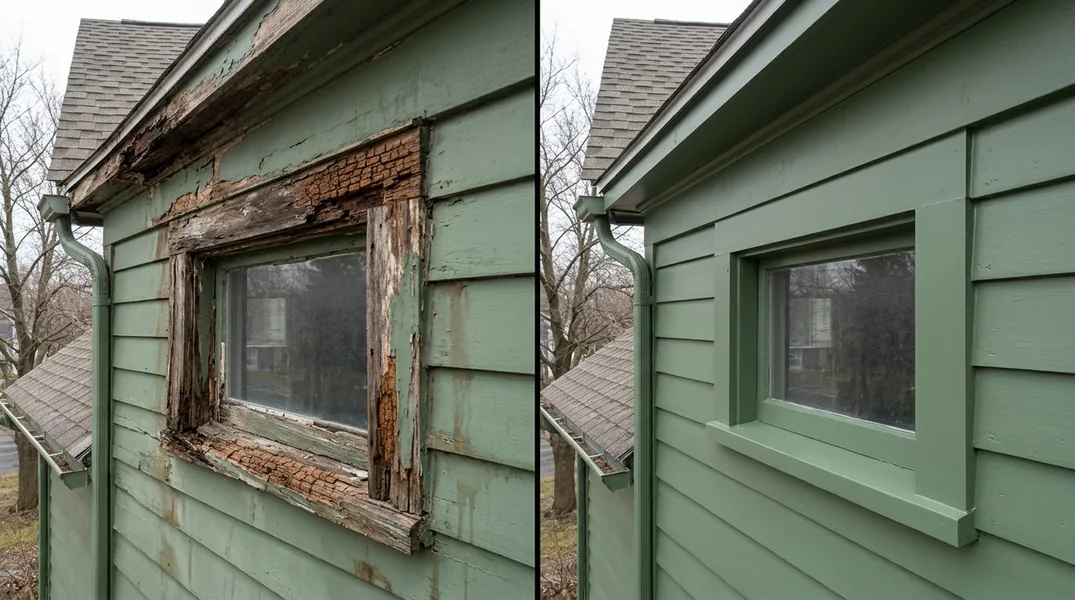
Wood fails here because Syracuse sits in one of the snowiest parts of the country, and the climate delivers sustained moisture in ways that rot wood from the inside out. Lake-effect snow and ice dams soak fascia, soffits, and wall cavities. Spring meltwater and humid summers keep basements damp. Sill plates and window sills absorb water that sits against them for weeks. Porch posts and deck ledgers are exposed to freeze-thaw cycles that open joints and drive water into end grain. The result is dry rot, which is not a crack or a cosmetic stain but a fungus that colonizes wood fibers in the presence of sustained moisture, turning sound wood into crumbly powder. Wet rot appears at thresholds, sill plates, and ledgers where water pools. Termites and powderpost beetles hollow members from inside while the paint film overhead still looks intact. A joist or beam can lose half its section and carry no visible sign on the surface.
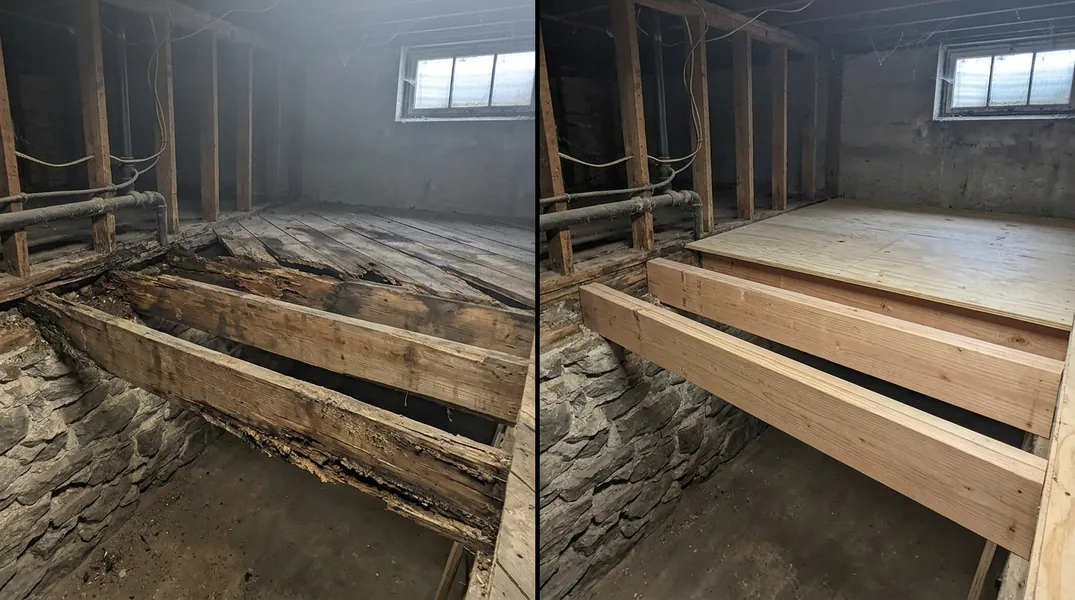
We read wood damage by probing to find where sound wood begins, checking the framing behind the visible surface, and tracing the water path that fed the decay. A soft spot on a window sill or a mushy section of fascia tells us something, but the real assessment happens when we open it up and look at what is underneath. A member that has lost a quarter or a third of its section to decay can often be repaired: we cut out the bad wood, rebuild the lost section with new pressure-treated stock, and close the water source so it does not fail again. A member that has lost more than that gets replaced. Filler over rot is not a repair, and neither is a bandage that does not address the water. If the leak is not closed, the repair fails in a few years and costs you twice.
On termite and insect damage, we work from your own pest inspection report. We repair and replace the wood that has been damaged, and that is where our work ends. Termite treatment, chemical treatment, fumigation, and pest control are a separate regulated trade, and we do not perform them. When you call us at (315) 883-2768, bring the pest report with you, and we will quote the carpentry work to make the framing sound again. If you are not sure whether you need an inspection first, we can help you think it through during a free wood rot inspection.
Structural Carpentry in Syracuse: Joists, Beams and Settling
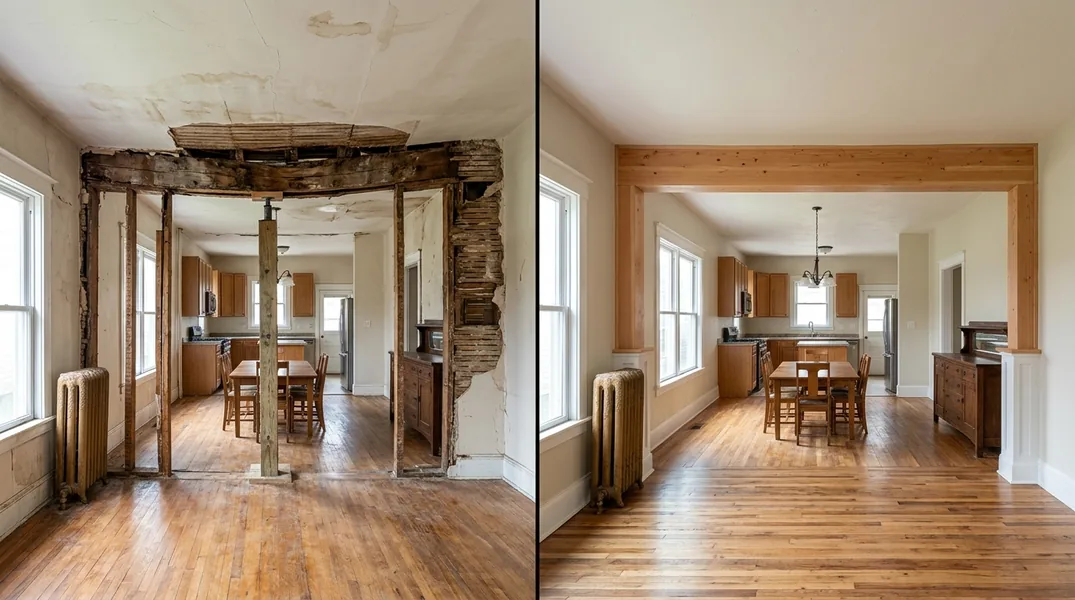
Structural carpentry is the work that holds the house up: floor joists and subfloor, sill plates and rim joists, beams and headers, and the framing that carries load. In a house that has settled over a century, a sloping floor or a sticking door is usually the normal condition here rather than active failure. What matters is whether the member is still sound where it bears, and whether something is still moving. When a floor has gone soft or noticeably out of level, we assess the joists and subfloor to determine whether a joist can be sistered (reinforced alongside the existing member), whether a section of subfloor needs replacement, or whether a joist has lost enough section to decay that it should be replaced outright. The same logic applies to sill plates, rim joists, and the beams that carry the floor above. We quote repair when the wood justifies it, and replacement when that is the honest answer.
Beam sizing and load-bearing alterations commonly require drawings from a licensed structural engineer and a permit from your local building department. We build to those drawings rather than produce them. If you are considering opening up a wall, removing a beam, or altering the framing that carries load, the first step is a conversation with a structural engineer and a call to the building department to understand what permits and drawings are required. We will work with those drawings and make sure the work is built right. Learn more about beam replacement and load-bearing wall removal and floor joist and subfloor repair.
Finish Carpentry and Built-Ins in Syracuse Homes
Finish carpentry is the visible craft: casing around doors and windows, baseboard and crown molding, wainscoting and custom built-ins, cabinets, interior and exterior doors, and stairs and railings. The older houses in Syracuse have period millwork that is worth matching rather than replacing. A coped joint at an inside corner is more elegant and more durable than a caulked corner, and scribing a baseboard to a wall that is neither flat nor plumb takes skill and time. We match profiles to existing trim, hold consistent reveals, and fit doors and built-ins into openings that are out of square because the house has settled. Bay windows, compact floor plans, and the original proportions of a century-old home demand precision. That is what we do.
Whether you need crown molding and baseboard installation, custom built-ins and shelving, interior door installation and repair, or stair and railing repair, we bring the same attention to craft and detail that the original builders brought to the house. We listen to what you want the space to do, and we build it to last.
Permits, Repair-or-Replace & What We Do Not Do
In most jurisdictions, a permit is commonly required for structural work such as removing or altering a load-bearing wall, replacing beams or joists, and altering stairs or exterior decks. Requirements and thresholds vary widely. Before starting your project, contact your local building department to verify what permits apply to your specific work and what drawings or inspections they require. We can help you understand what the work involves, and we will build to any permit requirements and engineered drawings that your building department requires. We can also help document damage for an insurance claim if your homeowner's policy covers the repair, though we cannot predict whether a claim will be approved or what coverage you will receive.
The decision to repair or replace a damaged member comes down to three things: how much sound section is left, whether the water source can be closed, and what the two costs compare to. When both options are real, we quote both and explain the trade-off. We do not offer structural engineering services, engineered drawings, or load calculations. We do not offer mold testing, assessment, or remediation, and we do not treat, fumigate, or perform pest control. What we do is build sound carpentry from honest assessment and good materials. Requirements vary, always verify with the Syracuse building department before starting your project. Call us at (315) 883-2768 or request a free wood rot inspection to discuss your specific situation.