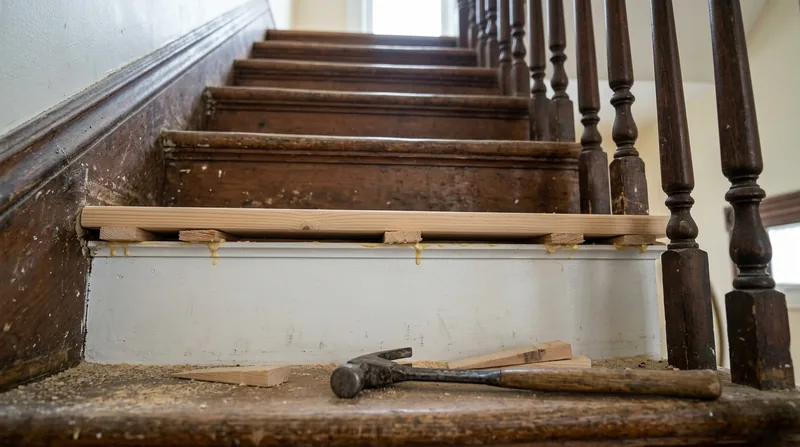




The steep interior stairs in Syracuse's two-family flats and Victorian homes take a beating. Treads creak and shift, balusters loosen from decades of foot traffic, and stringers split under load. When a handrail wobbles or a step feels soft underfoot, the problem is not cosmetic: a failing stair is a safety hazard and a sign that wood is moving, wearing, or rotting. Stair and railing repair in Syracuse means restoring these critical passages to solid, code-compliant condition. We rebuild squeaky treads, reinforce loose railings, repair rotted stringers, and install handrails that meet current safety standards. Whether the issue is a sagging tread in a Northside Italianate, a cracked newel post in Tipperary Hill, or a loose baluster in Eastwood, we diagnose the root cause, repair what can be saved, and replace only what must go. The result is stairs that are safe, quiet, and built to last another generation.
Why Stair and Railing Repair Matters in Syracuse's Older Homes
Syracuse's building stock is old, and old stairs show it. The Victorian Queen Annes and Stick-style homes on the Near Westside, the Arts and Crafts cottages in Sedgwick Farm, and the countless two-family flats stacked with front porches in Westcott and the Valley all have interior stairs that have been climbing and descending for 100 years or more. Wood moves with seasonal humidity swings. Freeze-thaw cycles loosen fasteners. Moisture from basements with damp sills and water-laden foundations wicks into stringers and treads. Carpenter ants tunnel through soft wood. The result is squeaks, shifts, soft spots, and railings that no longer feel solid underfoot.
- A loose or squeaky tread indicates wood movement, fastener failure, or glue breakdown between the stringer and the tread itself.
- Soft or spongy wood in a stringer or tread signals dry rot or carpenter ant damage and requires immediate inspection to assess whether repair or replacement is needed.
- A wobbly railing or baluster means the connection to the stringer or newel post has failed and poses a fall risk, especially on steep stairs common in two-family homes.
- Missing or damaged handrails do not meet current building code and create liability if someone is injured on an unsafe stair.
- Rotted wood around the base of a newel post or at a landing often reflects moisture intrusion from a wet basement or poor drainage around the foundation below.
Addressing these problems early stops the damage from spreading and keeps the stair safe and functional.
Local example: A two-family flat in Westcott with a basement that floods in spring thaw develops soft spots in the lower stringers within a few years. The freeze-thaw cycles that open every joint in Syracuse, combined with moisture wicking up from a wet sill plate, accelerate rot. We remove and sister the damaged section of the stringer, secure the connection to the newel post, and ensure the landing is properly sealed to prevent future water intrusion.
For more information on moisture-related wood damage, see our page on wood rot and dry rot repair in Syracuse.
How We Repair and Rebuild Stairs in Syracuse
Every stair repair starts with a clear diagnosis. We climb the stairs, test each tread for movement, check the railings and balusters for play, and inspect the stringers and newel post for rot, splits, or insect damage. We identify whether the problem is a loose connection, a fastener that has failed, wood that is soft or weakened, or a structural issue that affects the entire run. Once we know what we are dealing with, we propose a repair plan that is honest about what can be fixed and what must be replaced.
- We remove the tread or baluster carefully to expose the connection and inspect the stringer for rot or damage beneath the surface.
- We reinforce loose connections by adding new fasteners, epoxy, or blocking, or by sistering a new piece of wood to a weakened stringer.
- We replace treads, risers, balusters, or stringers only when the wood is too far gone to repair, using material that matches the original in species and dimension.
- We install new handrails and balusters to meet current code, which requires a 4-inch sphere rule (no gap larger than a 4-inch ball can pass through) and a 200-pound force resistance on any handrail.
- We secure all fasteners, seal any exposed end grain, and finish the work to match the existing stair and trim.
The goal is to return the stair to solid, safe, quiet operation without replacing more wood than necessary.
Local example: A Victorian home in North Syracuse has a creaking main staircase with loose balusters and a soft spot in one tread. We tighten the baluster-to-stringer connections with new fasteners and epoxy, replace the one damaged tread, and add blocking under the newel post where it meets the landing. The stair is now solid and quiet, and the original character is preserved. Total time on site: one day.
For related structural work, see our page on framing and structural carpentry in Syracuse.
| Repair Approach | Description | Best For |
|---|---|---|
| Tightening and Re-fastening | Remove the tread or baluster, inspect the connection, add new fasteners or epoxy, and reinstall. | Loose treads, squeaky stairs, wobbly balusters, and failed glue joints. |
| Sistering | Bolt a new piece of wood alongside a weakened or partially rotted stringer to restore load-bearing capacity. | Soft or split stringers, localized rot, and stairs that sag or feel unstable under load. |
| Tread or Riser Replacement | Remove the damaged tread or riser, cut and install a new one to match the original in dimension and species. | Rotted or split treads, worn risers, and damage that is too extensive to patch. |
| Baluster and Railing Replacement | Remove loose, cracked, or rotted balusters and newel posts, and install new ones that meet code and match the period style. | Damaged railings, non-compliant balusters, and stairs that lack a proper handrail. |
| Full Stringer Replacement | Remove and rebuild an entire stringer when rot or structural damage is too widespread to repair. | Extensive rot, multiple soft spots, stairs that are unsafe, and damage that spans the full run. |
Stair and Railing Repair Cost in Syracuse: What to Expect
The cost of stair and railing repair depends on what is wrong and how much wood needs attention. A simple tightening job, such as re-fastening a loose tread or securing a wobbly baluster, may run from $600 to $1,200. A more involved repair, such as sistering a damaged stringer or replacing a few treads and balusters, typically falls in the $1,500 to $3,500 range. A full stringer replacement or a complete railing rebuild can reach $4,000 to $8,000 or more, depending on the length of the stair, the complexity of the connections, and the extent of rot or damage.
Several factors move the price up or down. The depth of rot determines whether repair is enough or replacement is necessary. Access to the staircase matters: a main stair in an open foyer is easier to work on than a narrow staircase in a cramped corner. The species of wood affects material cost and difficulty. The presence of period detail, such as hand-turned balusters or carved newel posts, adds time and care. Whether the stair is interior or exterior, and whether permits are required for the work, also factor in.
We recommend getting two or three estimates from local carpenters so you can compare scope, method, and price. Many problems look worse than they are, and repair is often the honest answer. We explain what we find and why we recommend a particular approach, so you can make an informed decision. For a detailed breakdown of our pricing and what is included at each level, visit our pricing page.
Stair and Railing Repair Near Me: What Syracuse Homeowners Should Know When Hiring a Carpenter
Finding the right carpenter for stair and railing repair means looking for someone who understands the old homes that dominate Syracuse and who can diagnose problems clearly without pushing unnecessary replacement. Ask whether the carpenter has experience with the style and age of your home. Request references from recent stair repairs, and call them to ask whether the work was done on time, on budget, and whether the stairs are still solid and quiet. Check that the carpenter is fully insured and that the insurance covers both liability and property damage during the work.
Get a written estimate that spells out what will be repaired, what will be replaced, the materials to be used, the timeline, and the total cost. Ask whether a permit is needed. Stair modifications, handrail installations, and structural changes may require a permit from the City of Syracuse Building Department or your local code authority, depending on the scope. A good carpenter will know whether your job needs one and will help you navigate the process. If you live in a historic district or have an HOA, check whether there are restrictions on the materials or style of replacement balusters or railings.
Call us at (315) 883-2768 for a free, no-obligation estimate. We will inspect your stairs, explain what we find, and propose a repair plan that is honest and clear.
Stair & Railing Repair in Syracuse: Pricing Guide
| Service | Price | Details |
|---|---|---|
| Tread Tightening or Baluster Re-fastening | Starting at $600 | Loose connections, squeaks, and minor wobble; includes inspection, fastening, and one-day service call |
| Tread or Riser Replacement | Starting at $1,500 | Single damaged tread or riser; cost increases with species match, custom dimension, and extent of rot |
| Stringer Sistering or Partial Repair | Starting at $2,000 | Reinforcing a weakened stringer or replacing localized rot; final price depends on damage extent and access |
| Full Stringer or Railing Replacement | On estimate | Complete rebuild requires on-site inspection to assess wood condition, structural integrity, and code compliance |
| Travel and Estimate | Free | No charge for estimate or travel within Syracuse and surrounding areas; response within 24 hours |
Indicative pricing, the exact cost depends on square footage, finish, and site access. Free personalized estimate within 24h at (315) 883-2768.


